
 Related Products
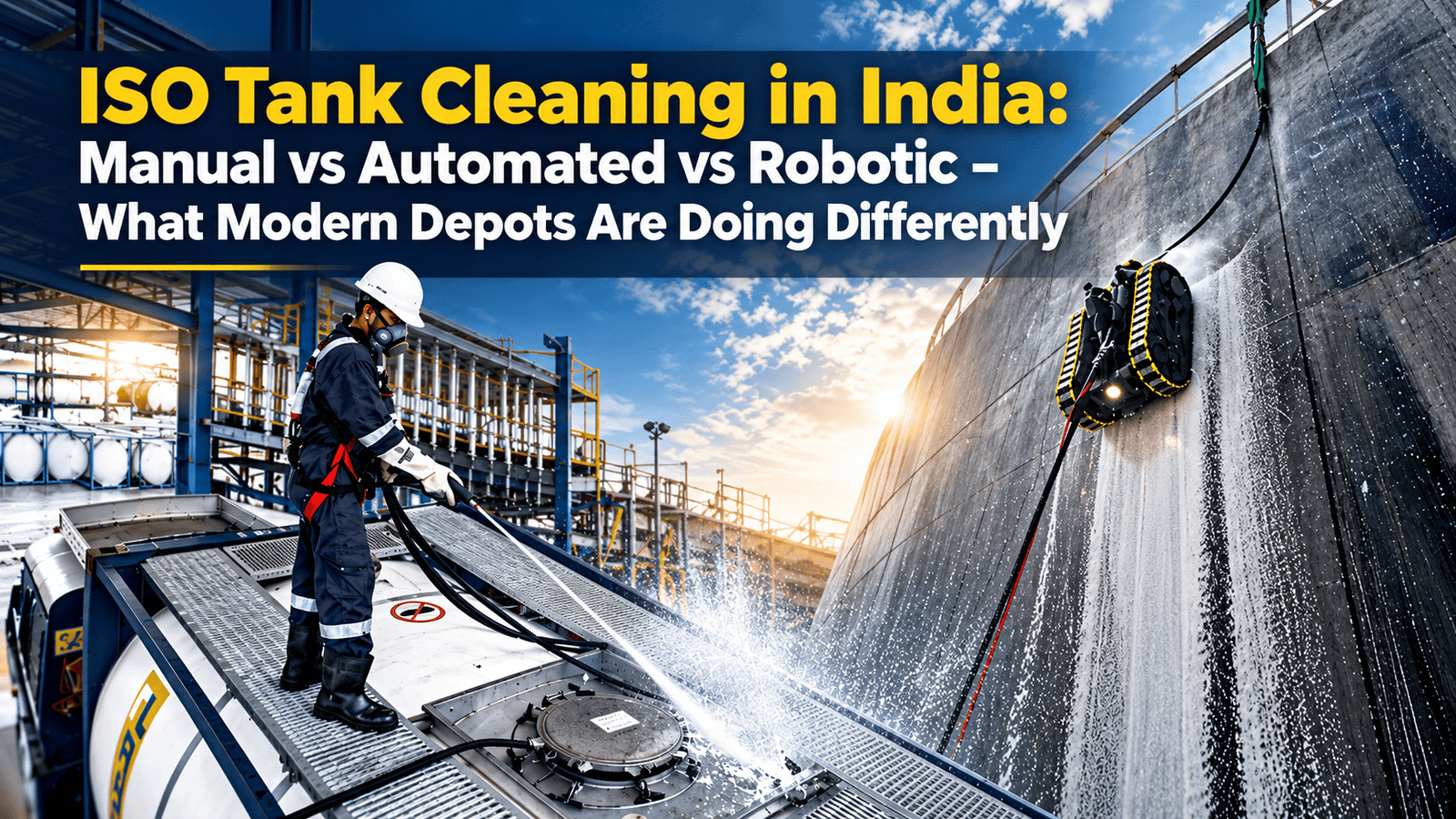
ISO Tank Cleaning in India: Manual vs Automated vs Robotic – What Modern Depots Are Doing Differently
At a Glance
- India has roughly 20–25 tank cleaning facilities.
- Manual cleaning requires confined space entry, where 40% of India’s industrial fatalities occur.
- Automated systems (Gröninger) clean an ISO tank container in 30 minutes – 75% faster than manual methods, using high-pressure, low-volume technology at 75–150 bar.
- Robotic systems (CLIIN) use magnetic-track crawlers to clean land and storage tanks at 800 m²/h – no scaffolding, no chemicals, 2–3 operators.
- India’s robotic tank cleaning market is projected to grow from USD 0.92 billion (2025) to USD 2.35 billion by 2031 at 16.8% CAGR.
- The right cleaning method depends on the tank type: automated for ISO tank containers, robotic for land and storage tanks, manual for small-scale or emergency operations.
India’s bulk liquid logistics sector handles everything from hazardous chemicals and edible oils to pharmaceutical intermediates. Every one of these cargoes passes through a tank that must be cleaned before reloading – and the cleaning method directly affects cargo integrity, turnaround time, worker safety, and environmental compliance.
This article compares three cleaning methods – manual, automated, and robotic – with specifications, safety profiles, and a decision framework for choosing the right approach by tank type.
Why Improper Tank Cleaning Costs More Than You Think
A tank that appears clean but carries trace residues from a previous cargo creates cascading problems. Cross-contamination between incompatible chemicals can cause product rejection, cargo damage, or hazardous reactions during transport. Tanks cleaned after every shipment show 20% lower risk of internal corrosion and contamination over their service life.
Every ISO tank at our major ports like JNPT (Nhava Sheva) or Mundra must carry a cleaning certificate from an authorised depot confirming the tank is fit for its next cargo. Regulatory frameworks – from OISD (Oil Industry Safety Directorate) confined-space rules to CPCB (Central Pollution Control Board) effluent standards – are tightening. Facilities that cannot demonstrate compliant cleaning risk losing their operating licences.
Three Methods of Tank Cleaning – Compared
-
Manual Cleaning
Manual cleaning is the oldest and most widespread method in India. Workers enter the tank through manholes – a confined space – and clean surfaces using brushes, scrapers, and hand-held water jets. The process typically requires 4–6 workers per tank.
Confined-space entry is the central risk. Workers face exposure to toxic residues (H₂S, benzene, toluene), oxygen-deficient atmospheres, and physical hazards from working inside a sealed vessel. Across Indian industry, roughly 40% of workplace fatalities occur in confined spaces. OISD and OSHA-aligned regulations (updated January 2026) now mandate additional atmospheric monitoring and rescue provisions for confined-space operations, increasing compliance costs by an estimated 20–30%.
Manual cleaning is slow (several hours per tank), inconsistent in quality, water-intensive, and generates large volumes of effluent. It remains in use primarily because of low upfront capital – but the operating cost per tank is the highest of all three methods when factoring in labour, safety compliance, downtime, and water treatment..
-
Automated Cleaning (Gröninger Systems – for ISO Tank Containers)
Automated cleaning systems use high-pressure, low-volume rotary jet technology to clean tank interiors without human entry. Gröninger Cleaning Systems, a Dutch manufacturer operating since 1947, supplies the technology used in most advanced ISO tank cleaning depots globally – including approximately 200 of Europe’s 600+ tank cleaning stations.
How it works: PLC-controlled rotor jets are lowered into the tank via the manhole. The jets rotate through programmed cleaning cycles – cold rinse, hot wash (up to 80°C), chemical wash, steam, and final rinse – all without anyone entering the tank.
Key specifications (from Gröninger / Amfico depot data):
- Pressure: 75–150 bar at 75–100 lpm (high pressure, low volume)
- Cleaning time: 30 minutes per tank – 75% shorter than manual cycles
- Water temperature: up to 80°C via softener-fed hot water generators
- Throughput: 15+ tanks per day in a well-configured depot
- Cleaning programs: fully automatic, operator-selectable via PLC
- Effluent: routed through ETP and ZLD systems
What automated cleaning eliminates: confined-space entry, inconsistent manual scrubbing, excessive water consumption, and subjective quality judgments. The Gröninger Cleaning Guard software logs every cleaning cycle digitally – pressure, temperature, duration, chemicals used – creating an auditable record for compliance and customer certification.
Automated cleaning converts tank turnaround from a labour-intensive, multi-hour process into a 30-minute, repeatable, documented operation.
-
Robotic Cleaning (CLIIN – for Land and Storage Tanks)
Robotic tank cleaning addresses a different problem: large-diameter land tanks and storage tanks where scaffolding, manlifts, and confined-space entry have traditionally been the only options.
CLIIN Robotics manufactures a Tank Cleaning Robot (TCR) that uses permanent magnetic tracks to adhere to internal and external tank surfaces – steel walls, ceilings, and hard-to-reach areas between frames and baffles.
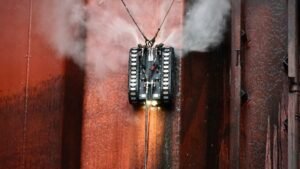
Key specifications of CLIIN robotics tank cleaning:
- Cleaning rate: up to 800 m²/h
- Weight: 89 kg + cleaning tool
- Dimensions: 747 mm × 562 mm × 310 mm
- Power: 100–240V, 13A+, 50–60 Hz
- Operators required: 2–3 (remote-controlled)
- Cleaning medium: freshwater only – no chemicals
- Temperature tolerance: tested for 672 hours at 80°C and 24 hours at -25°C
- Tools: high-pressure nozzles (multiple configurations), air-driven brush for dry cargoes, hull cleaning cavitation tool
What robotic cleaning eliminates: scaffolding setup (which can take days), manlift rental, chemical cleaning agents, and the safety risk of working at height inside a large tank. CLIIN’s freshwater-only approach also eliminates chemical effluent disposal.
How the Three Methods Stack Up – Speed, Safety, and Cost
|
Parameter |
Manual |
Automated (Gröninger) |
Robotic (CLIIN) |
|
Tank type |
ISO tanks, road tankers, storage tanks |
ISO tank containers, road tankers, IBCs, rail cars |
Land tanks, storage tanks |
|
Human entry required |
Yes – confined space |
No |
No |
|
Workers per tank |
4–6 |
1–2 (operator) |
2–3 (remote) |
|
Cleaning time |
Several hours |
~30 minutes |
Days (vs weeks for manual on large tanks) |
|
Pressure |
Low (hand-held) |
75–150 bar |
High-pressure nozzles (close to surface) |
|
Water usage |
High volume |
Low volume (75–100 lpm) |
Low (freshwater only) |
|
Chemicals required |
Yes |
Programmable (optional) |
No – freshwater only |
|
Quality consistency |
Operator-dependent |
Repeatable (PLC-controlled) |
Repeatable (remote-controlled) |
|
Digital records |
Manual logs |
Automatic (Cleaning Guard) |
Operator logs |
|
Safety risk |
High (confined space, toxic exposure) |
Minimal |
Minimal |
|
Capital cost |
Low |
High (turnkey system) |
Moderate (robot unit) |
|
Best for |
Small ops, emergency, one-off |
High-volume ISO tank depots |
Large storage tank maintenance |
Choosing the Right Cleaning Method by Tank Type
Not every depot needs every technology. The right method depends on what you are cleaning.
ISO tank containers and road tankers → Automated (Gröninger-type systems). These are standardised vessels with single or multiple manholes, cleaned in high volumes at container depots near ports. Automated systems deliver the throughput, consistency, and documentation that port-adjacent operations require.
Land tanks and storage tanks → Robotic (CLIIN-type systems). These are large-diameter, fixed-installation tanks where internal access requires scaffolding or manlifts. Magnetic-track robots eliminate the need for both, cleaning surfaces at 800 m²/h with freshwater only.
Small-scale operations, emergency cleaning, or facilities without capital for automation → Manual cleaning remains the fallback. However, regulatory trends (OISD confined-space rules, CPCB effluent standards) are making manual cleaning progressively more expensive and compliance-risky.
Depots that handle both ISO tanks and land tanks need both technologies – Gröninger for containerised equipment and CLIIN for storage tank maintenance. This dual-technology approach is what separates full-service depots from single-capability cleaning stations.
The question is not which method is “better” – it is which method matches the tank type, volume, and compliance environment you operate in.
What Happens at a Modern Cleaning Depot – Step by Step
A well-run cleaning depot follows a standardised sequence from tank arrival to dispatch:
- Arrival and pre-inspection – Tank enters the depot. Previous cargo documentation is reviewed. Visual and olfactory inspection identifies residues, damage, or contamination.
- Gas-free certification – For tanks that carried hazardous or flammable cargoes, atmospheric testing confirms the tank is safe for cleaning operations. This is mandatory before any work begins.
- Residue removal – Bulk residue is drained, pumped, or blown out using compressed air, depending on the cargo viscosity.
- Cleaning cycle – The appropriate method is applied. For ISO tanks at an automated depot: cold rinse → hot wash (up to 80°C) → chemical wash (if required) → steam → final rinse. The entire cycle runs through the Gröninger PLC with operator-selectable programs.
- Drying – A venturi system displaces heavy steam from the tank, accelerating drying. Heavy-duty dryers complete the process for fast turnaround.
- Post-wash inspection and testing – Internal surfaces are inspected for residue, odour, and damage. Quality control may include swab testing for food-grade tanks or visual inspection under specialised lighting.
- Cleaning certificate issued – A documented certificate confirming cleaning method, chemicals used, temperatures, and inspection results. This certificate travels with the tank to the next loading point.
- Dispatch or storage – Cleaned tanks are either dispatched immediately or stored in designated clean-tank stacks, separated from dirty, MRO, or coating-queue tanks.
A modern depot completes this entire sequence – arrival to dispatch-ready – within hours, not days.
Environmental Compliance: ZLD, ETP, and Pollution Board Requirements
Tank cleaning generates contaminated effluent – water mixed with chemical residues, solvents, and cleaning agents. In India, the Central Pollution Control Board (CPCB) enforces strict Zero Liquid Discharge (ZLD) requirements for industries that generate chemical wastewater. The Maharashtra Pollution Control Board (MPCB) issues Red Category licences to tank cleaning facilities, requiring periodic compliance audits.
What ZLD means for a tank cleaning depot:
- All wastewater must pass through an Effluent Treatment Plant (ETP)
- Treated water is recovered and reused – no liquid discharge into drains, rivers, or soil
- Concentrated residues are either safely disposed of or recycled
- The facility must maintain documented compliance for periodic audits
What this means for depot selection: If your cleaning depot lacks a functional ETP and ZLD system, it operates outside current regulatory requirements. LPG-operated boilers (instead of diesel or coal) further reduce emissions and meet air quality standards.
A scrubber system for managing fumes from odorous cargoes (common with chemical residues) is an additional compliance requirement that many smaller facilities lack.
Environmental compliance is not an add-on – it is a licensing prerequisite. Depots without ZLD and ETP face closure risk.
How Amfico’s Liquid Logistics Hub Operates
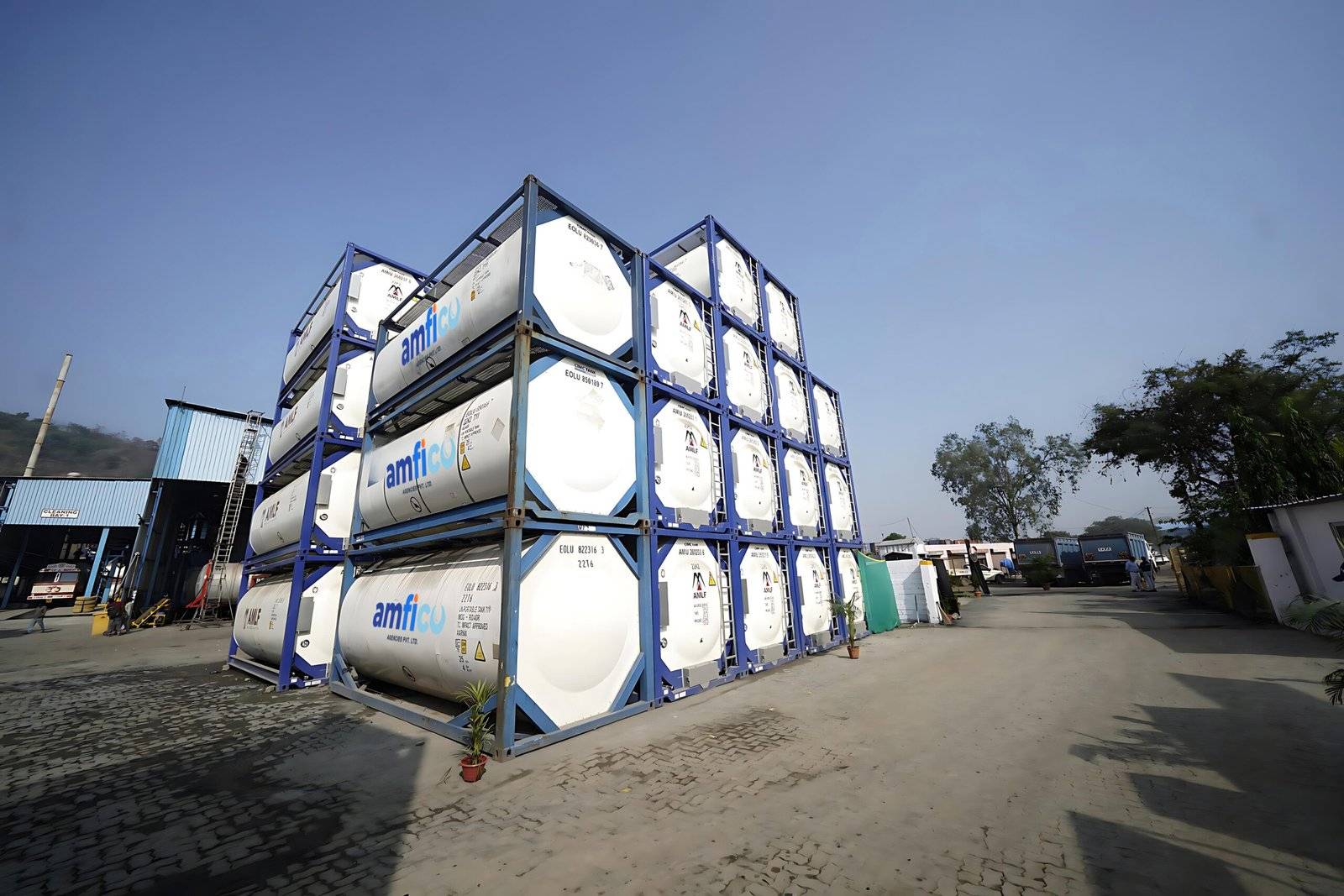
Amfico Liquid Logistics Hub at Jasai, Uran – 13 km from JNPT (Nhava Sheva) – operates as a full-service depot covering ISO tank cleaning, maintenance and repair, storage, tank heating, tank-to-tank transfer, and coating – all at one location.
Cleaning infrastructure:
- Drive-through depot design – India’s first exclusive drive-through containerised tank cleaning facility
- Two cleaning bays: one with five rotor jets (for multi-manlid equipment like baffle tanks and road tankers), one with a single rotor jet (for standard single-manlid ISO tanks)
- Gröninger automated cleaning systems – high-pressure (75–150 bar), low-volume (75–100 lpm), water temperatures up to 80°C, PLC-controlled cleaning programs
- CLIIN robotic cleaning for land and storage tank maintenance – magnetic-track crawlers, freshwater only, 2–3 operators
- Dedicated food-grade cleaning bay – separated from chemical cleaning to prevent cross-contamination
Safety and environmental systems:
- No-man-entry policy in the cleaning zone
- 20 KL Effluent Treatment Plant with Zero Liquid Discharge (ZLD)
- LPG-operated boilers (lower emissions than diesel)
- Scrubber system for odorous cargo fumes
- Venturi system for rapid steam displacement and tank drying
- Softener plant feeding pumps, boilers, and rotor jets
Integrated depot services:
- ISO tank MRO – framing, repairs, relief valve recalibration, shell and fitting pressure tests, tank rotator for complex repairs
- Tank container sale and lease – all types including heated, lined, refrigerated, and cryogenic
- APC ChemLINE® 784 coating (certified applicator) and Chartek fire proofing (Akzo Nobel certified)
- In-house PTFE gasket manufacturing (TANKMAN brand)
- Storage capacity: 500–600 tanks on a 4-acre site
- Two reach stackers for tank handling
- Fully insured operations
Why this matters for operators: A depot that combines automated ISO tank cleaning, robotic land tank cleaning, MRO, coating, and storage under one roof eliminates the need to move tanks between multiple facilities – reducing transit time, handling risk, and cost.