
 Related Products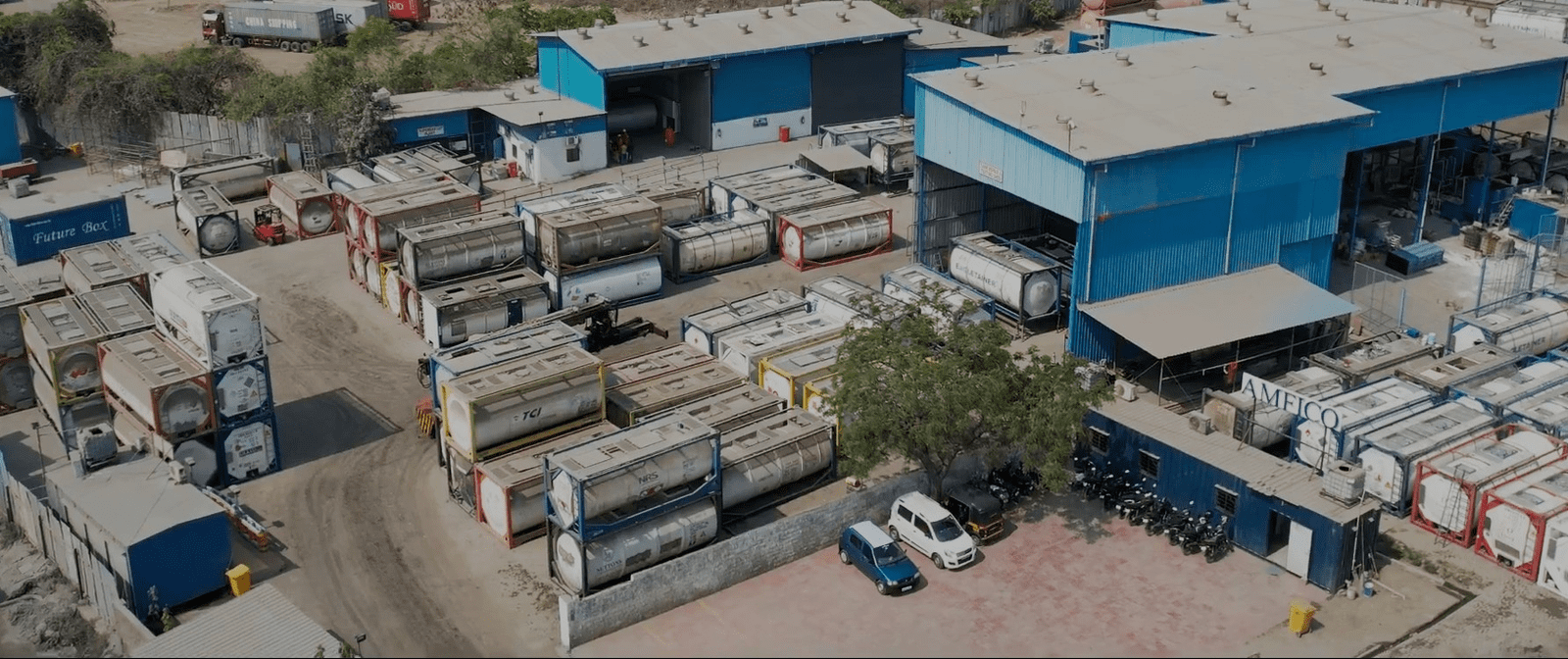
Flexitank Explained: How Flexitanks Work for Bulk Liquid Cargo
The global flexitank market ships over 700,000 units per year, and that number is climbing. The reason is straightforward: for non-hazardous bulk liquids, flexitanks cut shipping costs by 20-40% compared to drums, IBCs, and intermediate containers.
Yet most shippers considering flexitanks for the first time run into the same problem. The available information online is either promotional material from manufacturers or surface-level definitions that skip the operational details.
This guide covers what a flexitank actually is, how the loading and unloading process works step by step, which liquids can and cannot be shipped, how to choose the right size, and the risks that most guides leave out entirely. If you are evaluating this option for bulk liquid export from India, the India-specific section at the end covers port acceptance, compliance, and the cargo types Indian exporters ship most.
What Is a Flexitank?
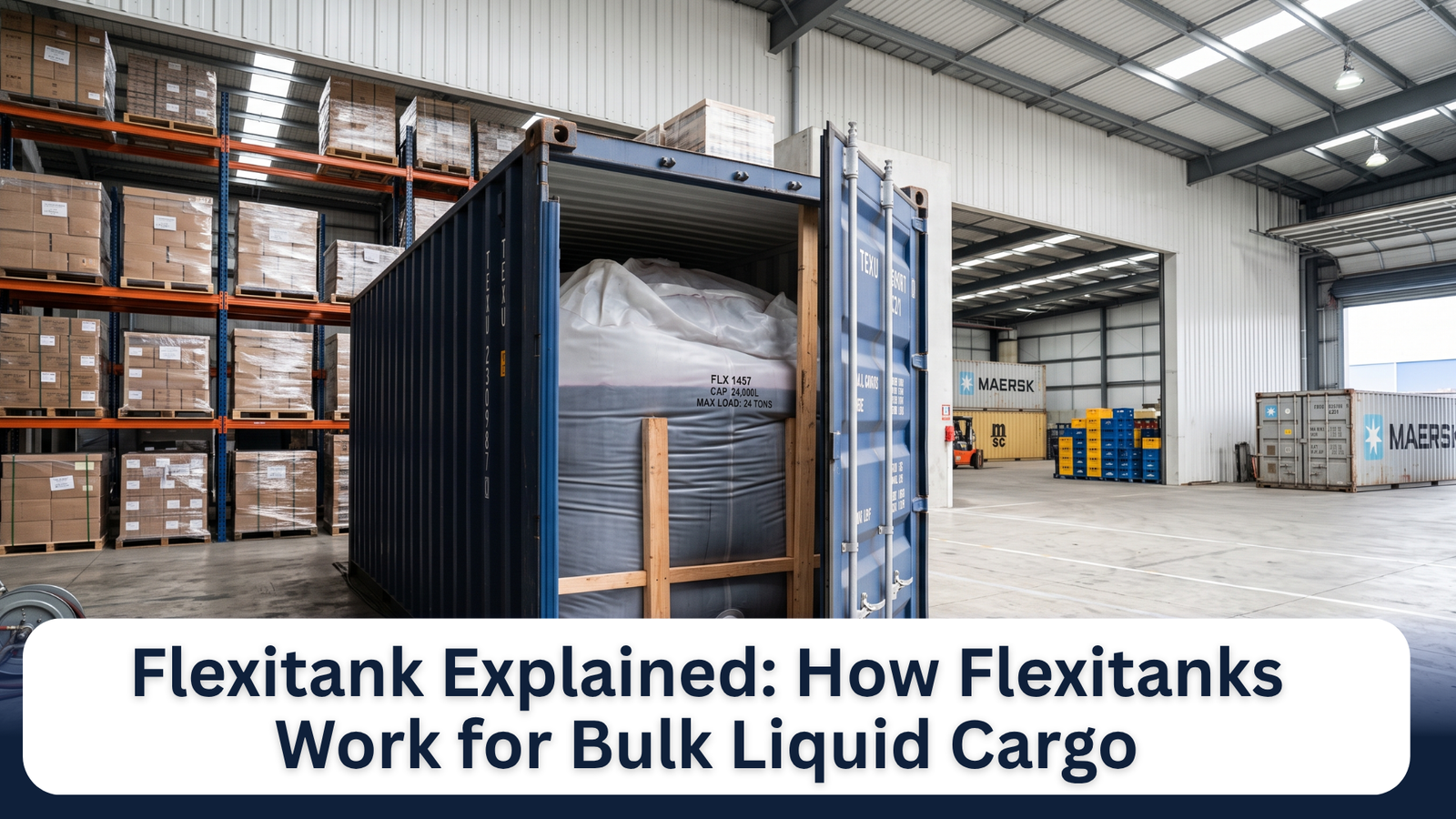
A flexitank is a large, collapsible bladder made from multiple layers of food-grade polyethylene (PE) and woven polypropylene (PP). It fits inside a standard 20-foot dry shipping container and converts it into a liquid transport unit capable of carrying 10,000 to 24,000 litres of non-hazardous bulk liquid.
Each unit is manufactured for single use. It arrives factory-sealed, is installed inside the container at the point of loading, filled with liquid cargo, shipped, emptied at the destination, and then disposed of or recycled. There is no return freight, no cleaning cycle, and no depot coordination required after delivery.
Key specifications:
- Capacity: 16,000 to 24,000 litres per unit
- Material: Multi-layer PE inner film with woven PP outer shell
- Use type: Single-use (one-way); recyclable after disposal
- Loading method: Top-fill or bottom-fill via valve; typical fill time under 45 minutes
- Cargo scope: Non-hazardous liquids only (no ADR/IMDG classified goods)
- Weight (empty): 50 to 70 kg depending on model and capacity
- Folded dimensions: Approximately 0.25 cubic metres
The term “flexibag” is sometimes used interchangeably with “flexitank,” though in industry usage, flexibags typically refer to lighter, thinner single-layer bags suited for short-distance or temporary storage. These multi-layer units, by contrast, are reinforced and engineered for international ocean freight.
What Is a Flexitank Made Of?
A standard unit consists of three to five distinct material layers, each serving a specific function:
Inner layer: Virgin food-grade polyethylene film. This is the layer in direct contact with the liquid cargo. For food-grade applications (edible oils, juices, wine), this layer must meet FDA (US Food and Drug Administration) or equivalent standards for food contact materials.
Barrier layer: A middle PE or EVOH (ethylene vinyl alcohol) layer that provides additional puncture resistance and acts as an oxygen barrier for cargo sensitive to oxidation.
Outer shell: Woven polypropylene fabric that gives the flexitank its structural strength. This layer handles the mechanical stress during transport, including the pressure of the liquid pushing against the container walls.
The valve assembly is typically a 3-inch butterfly valve or ball valve, positioned at the bottom or top of the unit depending on the loading and unloading configuration. Some models include dual valves for simultaneous filling and venting.
The bulkhead, a rigid partition installed at the container door end, is a critical accessory. It prevents the bladder from surging toward the doors during braking or ship movement and distributes pressure evenly across the container floor.
How Does a Flexitank Work? Step-by-Step Installation Process
This is the section most guides skip. Below is the actual installation process that Amfico’s trained field crew follows at port, factory, and logistics hub locations across India. This eight-step sequence covers everything from container inspection through liquid loading and final unloading.
Step 1: Container inspection
Before any installation begins, the 20-foot dry shipping container must pass a thorough physical inspection. The crew checks lashing points, all four wall panels (left, right, front, and rear), and the floorboard for structural soundness.
The container must be free of sharp edges, foreign objects, protruded screws, harmful or offensive odours, and transferrable stains or marks. Any of these can puncture the bladder or contaminate the cargo. The container must also hold a valid CSC (Container Safety Convention) plate.
Step 2: Sweep and check floorboard
The floorboard is swept clean of dust, dirt, and sand using a broom. During sweeping, the crew performs a second check for sharp edges or protruded screws that could be hidden under debris.
A key detail that many installation guides omit: personnel must take off shoes before entering the container. This prevents contamination and avoids introducing sharp objects (stones, metal fragments) that could damage the flexitank during installation.
Step 3: Install corrugated paper lining
The entire container interior is lined with corrugated paper to create a protective barrier between the steel surfaces and the flexitank bladder.
First, the floorboard is covered with paper lining. Next, the wall panels are covered. The paper is cross-taped to the walls to hold it in position. Two loops of paper lining are made at both rear corners of the container to cushion the areas where the bladder will press hardest during transit.
This lining step is critical. The corrugated paper absorbs minor surface irregularities in the container walls and floor, preventing point-pressure damage to the bladder during the weeks of ocean freight.
Step 4: Flexitank placement and valve preparation
The folded flexitank bladder is placed inside the lined container and carefully unfolded. The crew ensures it is positioned evenly on the floor without resting against the side panels.
The valve assembly is then prepared: the safety cap is loosened, the safety pin is pressed, and the handle is turned 90 degrees anti-clockwise. The safety cap is tightened again and the valve is covered with a dust cap to protect it during the next steps. The front portion of the bladder is gently folded at least two feet away from the door end. This gap is essential because it prevents damage to the flexitank during bulkhead installation.
Step 5: Bulkhead installation and securing
The bulkhead is the rigid partition that prevents the filled bladder from surging toward the container doors during braking or ship movement. Amfico’s installation uses a steel bar and PP frame system secured with cable ties.
Telescopic bars are placed below the lashing points near the floorboard and extended to the required length, then locked in position by twisting the bolts. The remaining steel bars are placed into the vertical recesses of the container walls. Cardboard or PP sheets are placed behind the steel bars for additional protection.
Each bar is secured with at least four cable ties. The PP frame is then attached to the bulkhead and steel bars with cable ties. The flexitank valve is gently inserted into the PP frame opening from the inside, taking care not to push it outward. The valve is pulled forward gently to confirm it sits tightly against the frame. The safety cap is loosened, the safety pin pressed, and the handle turned 90 degrees clockwise to lock. The safety cap is tightened and the valve is covered with the dust cap.
Step 6: Close container and apply warning labels
The remainder of the paper roll is placed upright at the centre of the bulkhead as a final cushion, and the left container door is closed. A warning sticker reading “CAUTION: BULK LIQUID NON HAZARDOUS TANK IN CONTAINER” is affixed to the left door, either above or below the CSC plate. This sticker alerts port handlers and transport operators that the container holds a liquid-filled flexitank and must not be tilted, forked, or opened from the left side during transit.
At this point, the flexitank installation is complete and the container is ready for liquid loading.
What Liquids Can Be Transported in a Flexitank?
Flexitanks are approved for non-hazardous liquids only. Any cargo classified as dangerous goods under ADR (road), IMDG (sea), or UN regulations cannot be shipped in a flexitank. For hazardous liquids, an ISO tank container is the required alternative.
Food-grade liquids: edible oils (palm, soya, sunflower, olive, castor), fruit juice concentrates, wine, glucose syrup, fructose syrup, glycerin, milk, liquid malt extract, honey, and drinking water.
Industrial liquids: base oils, liquid latex, liquid detergents, printing inks, lubricants, biodiesel, liquid fertilisers, transformer oils, and non-hazardous chemical intermediates.
Not suitable for flexitanks: industrial acids, solvents, petroleum distillates, flammable liquids, corrosive chemicals, reactive substances, pressurised gases, or any material classified under UN dangerous goods regulations.
For food-grade applications, the flexitank’s inner PE layer must carry FDA or equivalent certification for food contact. Because each unit is factory-new at the point of use, there is zero risk of cross-contamination from a previous cargo. This makes them a strong fit for food-grade and pharmaceutical-grade base liquids where hygiene is non-negotiable.
Flexitank Capacity: How to Choose the Right Size
Flexitanks are available in standard capacities of 16,000, 18,000, 20,000, 22,000, and 24,000 litres. Custom sizes from 10,000 to 24,000 litres can be manufactured to order.
The correct size is not determined by how much liquid you want to ship. It is determined by the liquid’s density (specific gravity). A 20-foot container has a maximum payload of approximately 24,000 kg. If your liquid is denser than water (specific gravity above 1.0), you must reduce the volume to stay within the container’s weight limit.
Capacity guide by liquid type and density:
|
Liquid |
Density (kg/m³) |
Recommended Flexitank Size |
|
Wine |
985-990 |
24,000 L |
|
Fruit juice concentrate |
1,050-1,100 |
21,000-22,000 L |
|
Olive oil |
905-920 |
22,000-24,000 L |
|
Palm oil |
880-900 |
21,000-24,000 L |
|
Glycerin |
1,260 |
18,000-19,000 L |
|
Liquid latex |
920-960 |
20,000-22,000 L |
|
Base oil |
850-900 |
24,000 L |
|
Liquid detergent |
1,000-1,050 |
22,000-24,000 L |
The calculation: Divide the container’s maximum payload (24,000 kg) by the liquid’s density (kg/litre). The result is the maximum volume in litres. Then round down to the nearest standard flexitank size to maintain a safety margin.
For example, glycerin at 1.26 kg/litre: 24,000 divided by 1.26 equals approximately 19,000 litres. A 19,000 L or 18,000 L unit is the correct choice.
Advantages of Flexitanks Over Drums and IBCs
For shippers currently using drums (200-litre steel or plastic) or IBCs (1,000-litre intermediate bulk containers) to move non-hazardous liquids, the switch offers measurable improvements across cost, capacity, and labour.
|
Factor |
Flexitank (24,000 L) |
Drums (200 L x 120) |
IBCs (1,000 L x 20) |
|
Volume per container |
24,000 litres |
24,000 litres |
20,000 litres |
|
Cost per litre (transport) |
Lowest |
30-40% higher |
15-25% higher |
|
Loading time |
30-45 minutes |
4-6 hours |
2-3 hours |
|
Labour required |
2-3 workers |
6-8 workers + forklift |
4-5 workers + forklift |
|
Contamination risk |
Zero (factory-new) |
Residue from previous use |
Residue from previous use |
|
Return logistics |
None (single-use) |
Empty drums must be returned |
Empty IBCs must be returned |
|
Container utilisation |
100% floor space used |
~80% (dead space between drums) |
~85% (gaps between IBCs) |
The cost advantage compounds over multiple shipments. A shipper moving 240,000 litres per year in drums is handling 1,200 individual units with forklifts, pallets, and return logistics. The same volume in flexitanks is 10 container loads with minimal handling.
For a detailed comparison between flexitanks and ISO tank containers specifically, see our guide: Flexi Tank vs ISO Tank: Which Is Right for Your Bulk Liquid Cargo?
Risks and Limitations: When Not to Use a Flexitank
No guide that only lists advantages is giving you the full picture. Flexitanks have specific limitations that every shipper should evaluate before committing.
Container damage and carrier restrictions. A fully loaded unit exerts outward pressure on the container’s side walls. Over time or with improper installation, this can cause permanent bulging of the container panels. Some major shipping lines restrict or refuse these bookings due to the damage risk and the potential liability from a leak contaminating adjacent cargo in the vessel hold. Before booking, confirm that your chosen carrier and destination port accept these shipments.
No temperature control. These units offer no heating, cooling, or insulation. If your cargo solidifies below a certain temperature (coconut oil solidifies at approximately 24 degrees Celsius), degrades in heat, or requires a controlled temperature range during transit, this option is not suitable. For temperature-sensitive liquids, an ISO tank with heating coils or insulation is the correct choice.
Sloshing and dynamic forces. During transport, the liquid inside the bladder moves with the vehicle or vessel. On road, emergency braking creates surge pressure against the bulkhead. On rail, lateral forces during coupling can stress the bladder walls. Some rail operators restrict this mode of transport for the same reason. Ocean freight is generally the safest mode because the container is secured in the vessel hold.
Insurance complexity. Cargo insurance for flexitank shipments can be more complex than for ISO tanks or drums. Insurers factor in the higher leakage risk profile of a flexible bladder versus a rigid steel vessel. For high-value liquids, expect more detailed underwriting requirements.
Not for hazardous cargo. This bears repeating: flexitanks cannot carry any liquid classified as hazardous under ADR, IMDG, or UN dangerous goods regulations. There are no exceptions to this rule.
Flexitank Shipping in India: What Exporters Need to Know
India is one of the largest exporters of edible oils, castor oil, base oils, and agricultural chemical intermediates, and flexitanks are increasingly the preferred shipping method for these products. Here is what Indian exporters and logistics operators should know.
Port acceptance. Major Indian container ports including JNPT (Nhava Sheva), Mundra, Chennai, and Hazira accept flexitank shipments. However, acceptance can vary by terminal operator and shipping line. Always confirm with your freight forwarder and the specific terminal before booking.
FSSAI compliance. For food-grade liquid exports from India (edible oils, fruit concentrates, syrups), the flexitank’s inner layer must comply with food contact material regulations. While FSSAI (Food Safety and Standards Authority of India) governs domestic food safety, export shipments must also meet the importing country’s food contact standards, typically FDA (US), EU Regulation 10/2011 (Europe), or equivalent.
Common Indian export products shipped via flexitank: castor oil (India is the world’s largest producer), soya oil, rice bran oil, groundnut oil, base oils, liquid latex, glycerin, and non-hazardous chemical intermediates.
Amfico’s flexitank services. Amfico provides flexitank solutions through its partnership with Infinity Bulk Logistics (Malaysia), covering professional on-site installation at ports, factories, and logistics hubs across India. The company’s liquid logistics hub near JNPT provides integrated support including container sourcing, flexitank installation, and cargo handling under one operation.
Certifications and Quality Standards for Flexitanks
A flexitank is only as safe as its manufacturing and testing standards. Here is what to verify before selecting a supplier.
COA Flexitank Compliance. The Container Owners Association (COA) publishes a Code of Practice for flexitanks that sets minimum standards for design, testing, installation, and operation. Reputable manufacturers comply with this code, and COA compliance is listed as a baseline certification by leading suppliers including Amfico’s manufacturing partner, Infinity Bulk Logistics.
FDA / food-contact certification. For food-grade liquids, the PE film must carry FDA approval (or equivalent) confirming it is safe for direct contact with food products. Amfico’s Infinity flexitanks carry FDA certification for food-grade applications.
FSSC 22000 / HACCP. Leading flexitank manufacturers operate under FSSC 22000 (a food safety management system built on the ISO 22000 framework) and HACCP (Hazard Analysis and Critical Control Points) certification. These provide documented process controls for food-grade liquid handling from raw material selection through final dispatch. Infinity flexitanks hold both FSSC 22000 and HACCP certifications.
KOSHER and HALAL. For exporters shipping to markets that require religious dietary compliance, certified flexitanks with KOSHER and HALAL approvals are available. Amfico’s Infinity flexitanks carry both certifications, covering edible oil, juice, and food-ingredient shipments to the Middle East, Southeast Asia, and other markets where these certifications are mandatory or preferred.
Testing regime. Every quality-certified flexitank undergoes rigorous testing for leakage, pressure tolerance, and material integrity before dispatch. This ensures the bladder performs under the dynamic forces of ocean freight, road transport, and cargo handling.
ISO 9001. Manufacturers with ISO 9001 quality management certification demonstrate consistent production standards and process controls. Amfico’s manufacturing partner holds ISO 9001 certification.
Always request test certificates and material data sheets from your flexitank supplier. If a supplier cannot provide these documents, that is a red flag.
Choosing the Right Solution for Your Cargo
A flexitank is the right choice when your cargo is non-hazardous, does not require temperature control, ships on a one-way route, and contamination prevention is a priority. The economics are strongest for shippers with low to moderate frequency (fewer than four shipments per year on the same lane) and for those currently using drums or IBCs who want to reduce cost and handling time.
For hazardous cargo, temperature-sensitive products, or high-frequency repeat routes, an ISO tank container is the better fit.
Amfico provides both flexitank and ISO tank solutions across India’s busiest ports and industrial corridors. Whether you need a single flexitank installation or a recurring bulk liquid logistics programme, Amfico evaluates your cargo, route, and compliance requirements before recommending a solution.
Get in touch with our team to evaluate the right solution for your next shipment.
Amfico Agencies Pvt. Ltd. has been a trusted name in liquid logistics for over two decades, operating from Mumbai with hub operations at Nhava Sheva (Uran, Maharashtra). The company represents global principals in ISO tank containers, flexi tanks, cold chain solutions, and industrial safety equipment.